
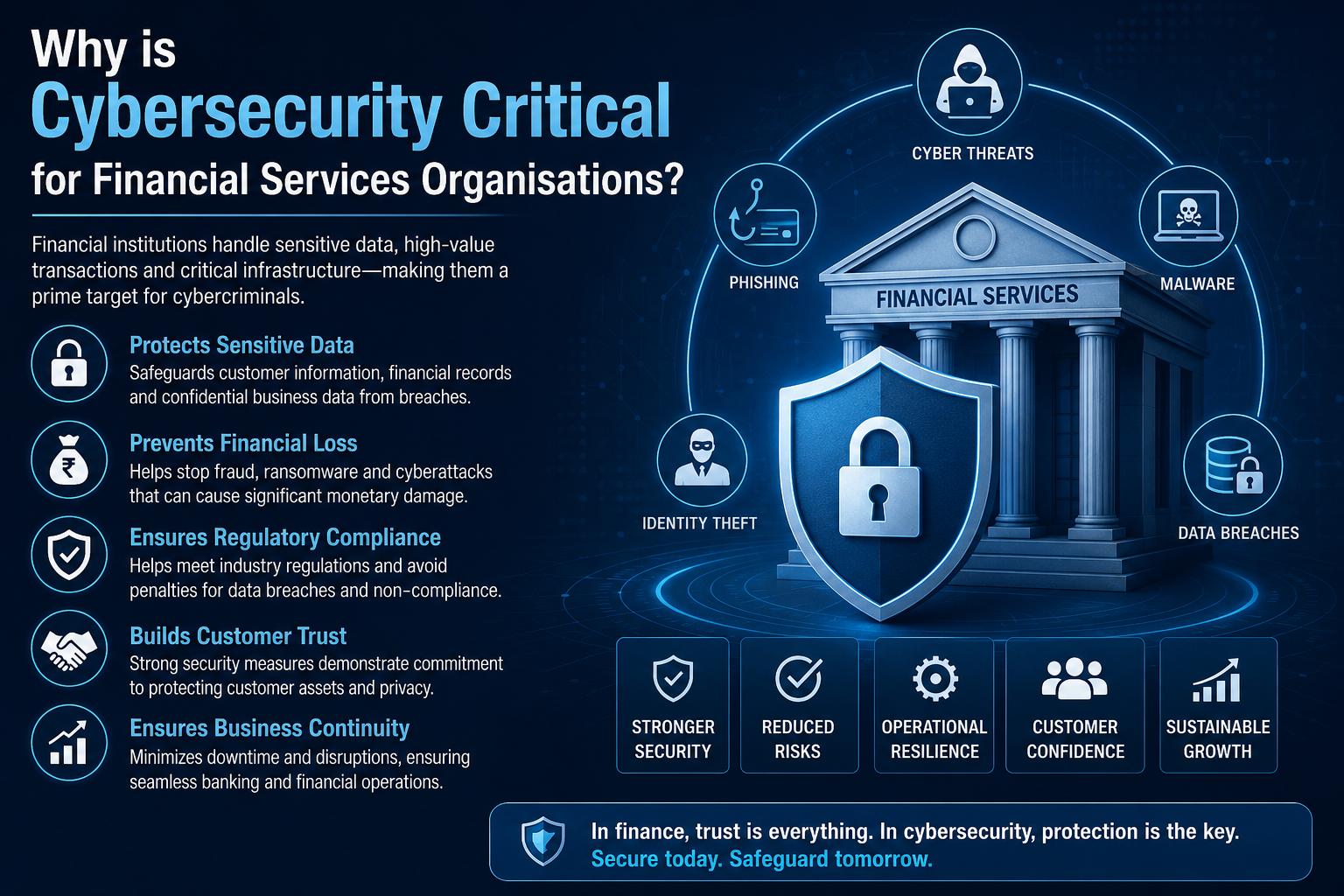
Financial institutions manage some of the world’s most valuable digital assets, including customer identities, payment information, and sensitive financial records. As banks and financial service providers accelerate digital transformation, cybercriminals continue to develop sophisticated techniques to exploit vulnerabilities. Strong cybersecurity for financial services has become essential to protect trust, ensure compliance, and maintain business continuity.
The Evolving Cyber Threat Landscape in Financial Services
Financial organisations operate in a rapidly evolving threat landscape, driven by advanced malware, ransomware, and phishing attacks. Cybercriminals are becoming more advanced in using AI techniques to launch more targeted attacks against banks, fintech companies, and insurance providers.
With the adoption of cloud environments, remote work, and interconnected infrastructure, banks face an expanded attack surface and need additional measures to address their cybersecurity posture.
Common Threats in Banking and Financial Services
The financial services industry experiences various threats. These threats consist of the following types of attacks:
1. Ransomware: Criminals gain access to systems, encrypt critical data, and demand payment in return for restoring access.
2. Phishing and social engineering: Hackers manipulate individuals to disclose sensitive information or credentials.
3. Identity theft: Criminals use personal information for illegal actions.
4. Advanced persistent threats (APTs): Attackers infiltrate systems and remain undetected for extended periods.
Cybersecurity Strategies for Protecting Financial Data
A robust financial services cybersecurity framework helps organisations strengthen their defence against evolving threats.
Some indispensable techniques are the following:
- Implementing the latest AI/ML-powered security technologies
- Employing Zero Trust principles
- Using XDR technology for timely detection and response
- Taking the right approach to data protection
Best Practices for Improving Cyber Resilience
- Conduct regular audits of their security systems and vulnerability assessments
- Educating employees about phishing and social engineering schemes
- Developing contingency plans for business continuity
- Working with security specialists for continuous monitoring and threat detection
Protect Your Financial Data with Seqrite’s Solutions
Cyber threats continue to evolve, and financial institutions need to adopt security measures that evolve as well. Seqrite combines advanced AI/ML-based security technology with threat intelligence developed by Seqrite Labs to help businesses protect their digital environment.
Explore Seqrite’s cybersecurity solutions for financial services and build a stronger defence against evolving cyber threats.